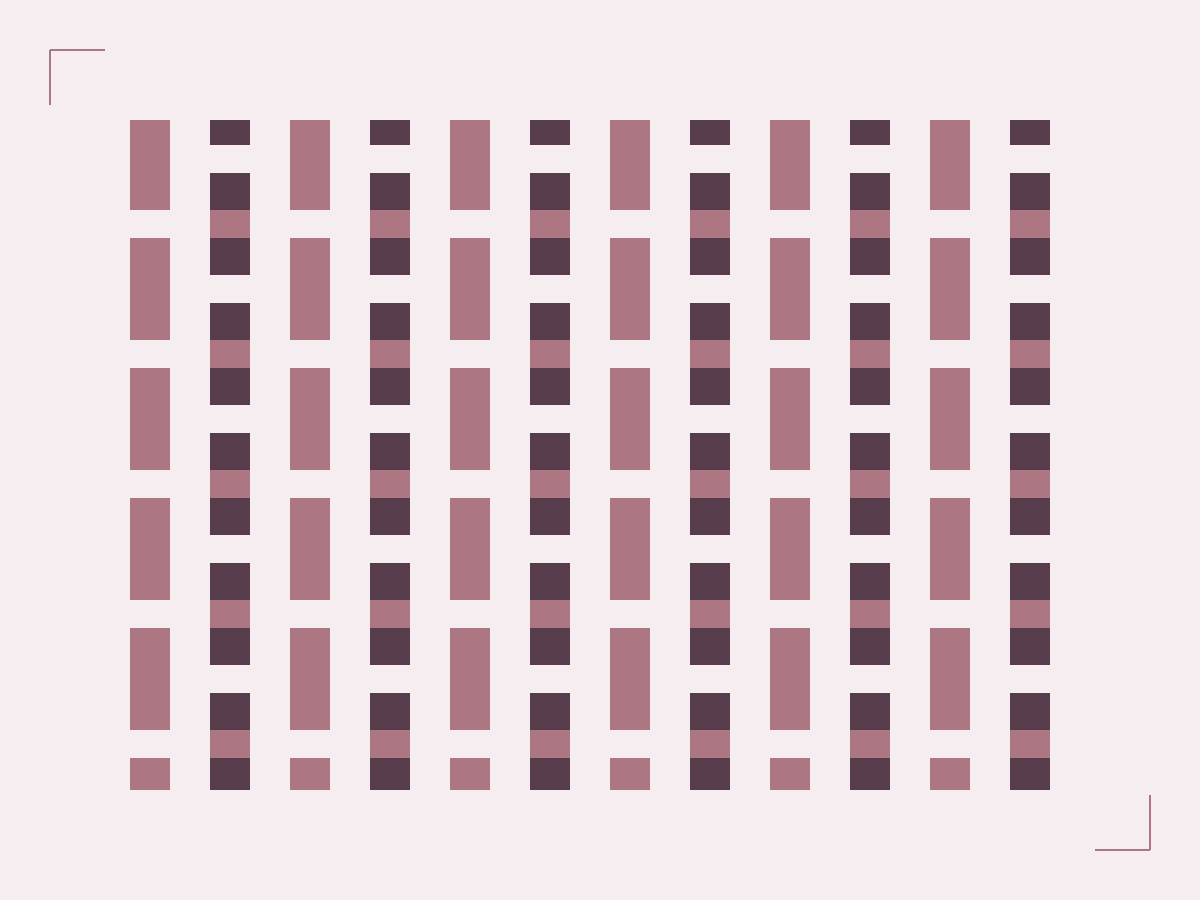
A band on graph paper is a small study within Loom Interval, our collection about small weaving studies and deliberate color repeats. The aim is to give one ordinary detail enough attention to become useful. Begin with woven bands, keep graph paper and colored pencils nearby, and let the exercise set the scale of the session.
Choose a small sample
Plan a narrow repeat before making a sample. This is the central task for this page. Before beginning, write the subject as a short heading and leave space for a drawing or a few measured notes. Your first record should show what was actually in front of you rather than what you expected to find.
Work with a small piece of cloth or a paper diagram before planning a large project. Observe the direction of threads and the way the surface bends. Use a familiar textile technique for any practical sample. A clear record of material, sample size and visible structure makes it possible to compare results later.
A useful way to work
Choose a sample small enough to compare easily. Look at both faces of the sample and draw the edge as well as the center. Repeated patterns become easier to understand when you mark one complete repeat. Keep actual thread or fabric labels with your notes. A useful swatch page includes what changed, what stayed the same and one question for the next sample.
- Give this session a clear heading: A band on graph paper.
- Plan a narrow repeat before making a sample.
- Choose a sample small enough to compare easily.
- Save one observation and one question in your own words.
Try a second pass
For a second pass, keep the subject of a band on graph paper and change the way you record it. A short diagram can replace a long description; a paired comparison can replace a single impression. Keep the first attempt alongside the second so the difference remains visible. If the result is uncertain, name the uncertainty instead of filling the gap.
Keep the useful detail
Close the page with one sentence about woven bands and one question that arose from this particular exercise. A crossing study offers a related direction: draw the visible over-and-under sequence. The connection is a starting point, not a requirement to complete the journal in order.